
 Image 1 of 1
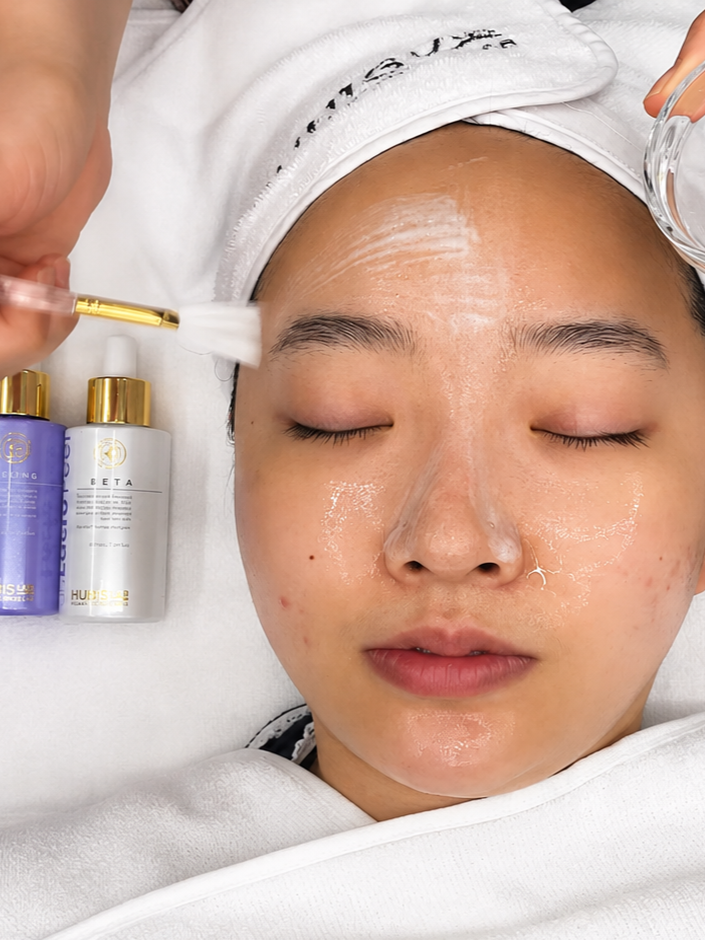
Treatment name: Chemical Peel
A customized resurfacing treatment that smooths texture, brightens the complexion, and refines pores.
How it works:
Uses professional-grade exfoliating acids (selected to your skin’s needs) to remove damaged surface cells and stimulate cell turnover.
Common acid types used: glycolic acid (AHA) for gentle resurfacing and brightening, lactic acid (AHA) for hydration and mild exfoliation, salicylic acid (BHA) for oil‑soluble pore penetration and acne control, trichloroacetic acid (TCA) for deeper resurfacing when indicated.
Peel strength and formulation are customized based on skin type, concerns, and tolerance.
Benefits:
Smooths rough texture and fine lines.
Brightens dull, sallow skin and reduces hyperpigmentation.
Refines and unclogs pores; reduces congestion and blackheads.
Helps improve acne-prone skin by reducing oil and bacteria buildup.
Supports overall skin health by encouraging collagen production and regular cell renewal.
Best for:
Dull or uneven skin tone.
Hyperpigmentation, sun spots, or post-inflammatory discoloration.
Acne-prone or congested skin with blackheads/whiteheads.
Rough texture, mild scarring, and enlarged pores.
Downtime:
Varies by peel type and skin response.
Recommended protocol:
Series of 3–6 treatments spaced according to the peel type (commonly every 2–6 weeks) for optimal, cumulative results.
Maintenance peels every 3–6 months as needed to sustain improvements.
Pre‑ and post‑treatment care (key points):
Pre-treatment: avoid harsh exfoliants, retinoids, and waxing 5–7 days prior; use sunscreen and hydrate skin in the weeks leading up to your peel.
Post-treatment: follow aftercare instructions—gentle cleanser, hydrating/healing serums, broad‑spectrum SPF daily, avoid direct sun exposure and aggressive products until fully healed.
Use of calming agents (e.g., hyaluronic acid, azelaic acid, mild peptides) and avoidance of physical exfoliation speeds recovery.
Possible side effects and contraindications:
Temporary redness, stinging, peeling, sensitivity, or increased dryness.
Risk of irritation, post-inflammatory hyperpigmentation, or infection if aftercare not followed.
Not recommended during pregnancy for certain acids; active cold sores, open wounds, recent isotretinoin use, or certain medical conditions—consultation required.
Treatment name: Chemical Peel
A customized resurfacing treatment that smooths texture, brightens the complexion, and refines pores.
How it works:
Uses professional-grade exfoliating acids (selected to your skin’s needs) to remove damaged surface cells and stimulate cell turnover.
Common acid types used: glycolic acid (AHA) for gentle resurfacing and brightening, lactic acid (AHA) for hydration and mild exfoliation, salicylic acid (BHA) for oil‑soluble pore penetration and acne control, trichloroacetic acid (TCA) for deeper resurfacing when indicated.
Peel strength and formulation are customized based on skin type, concerns, and tolerance.
Benefits:
Smooths rough texture and fine lines.
Brightens dull, sallow skin and reduces hyperpigmentation.
Refines and unclogs pores; reduces congestion and blackheads.
Helps improve acne-prone skin by reducing oil and bacteria buildup.
Supports overall skin health by encouraging collagen production and regular cell renewal.
Best for:
Dull or uneven skin tone.
Hyperpigmentation, sun spots, or post-inflammatory discoloration.
Acne-prone or congested skin with blackheads/whiteheads.
Rough texture, mild scarring, and enlarged pores.
Downtime:
Varies by peel type and skin response.
Recommended protocol:
Series of 3–6 treatments spaced according to the peel type (commonly every 2–6 weeks) for optimal, cumulative results.
Maintenance peels every 3–6 months as needed to sustain improvements.
Pre‑ and post‑treatment care (key points):
Pre-treatment: avoid harsh exfoliants, retinoids, and waxing 5–7 days prior; use sunscreen and hydrate skin in the weeks leading up to your peel.
Post-treatment: follow aftercare instructions—gentle cleanser, hydrating/healing serums, broad‑spectrum SPF daily, avoid direct sun exposure and aggressive products until fully healed.
Use of calming agents (e.g., hyaluronic acid, azelaic acid, mild peptides) and avoidance of physical exfoliation speeds recovery.
Possible side effects and contraindications:
Temporary redness, stinging, peeling, sensitivity, or increased dryness.
Risk of irritation, post-inflammatory hyperpigmentation, or infection if aftercare not followed.
Not recommended during pregnancy for certain acids; active cold sores, open wounds, recent isotretinoin use, or certain medical conditions—consultation required.